CHART in Tivoli 2024
Anna Fernsten Nilén curated the 3rd edition of CHART in Tivoli, developing an audience-friendly curatorial strategy that invited deeper engagement with the works. The program featured a digital map and a series of artist-produced audioguides, offering Tivoli guests new ways to experience the installations.
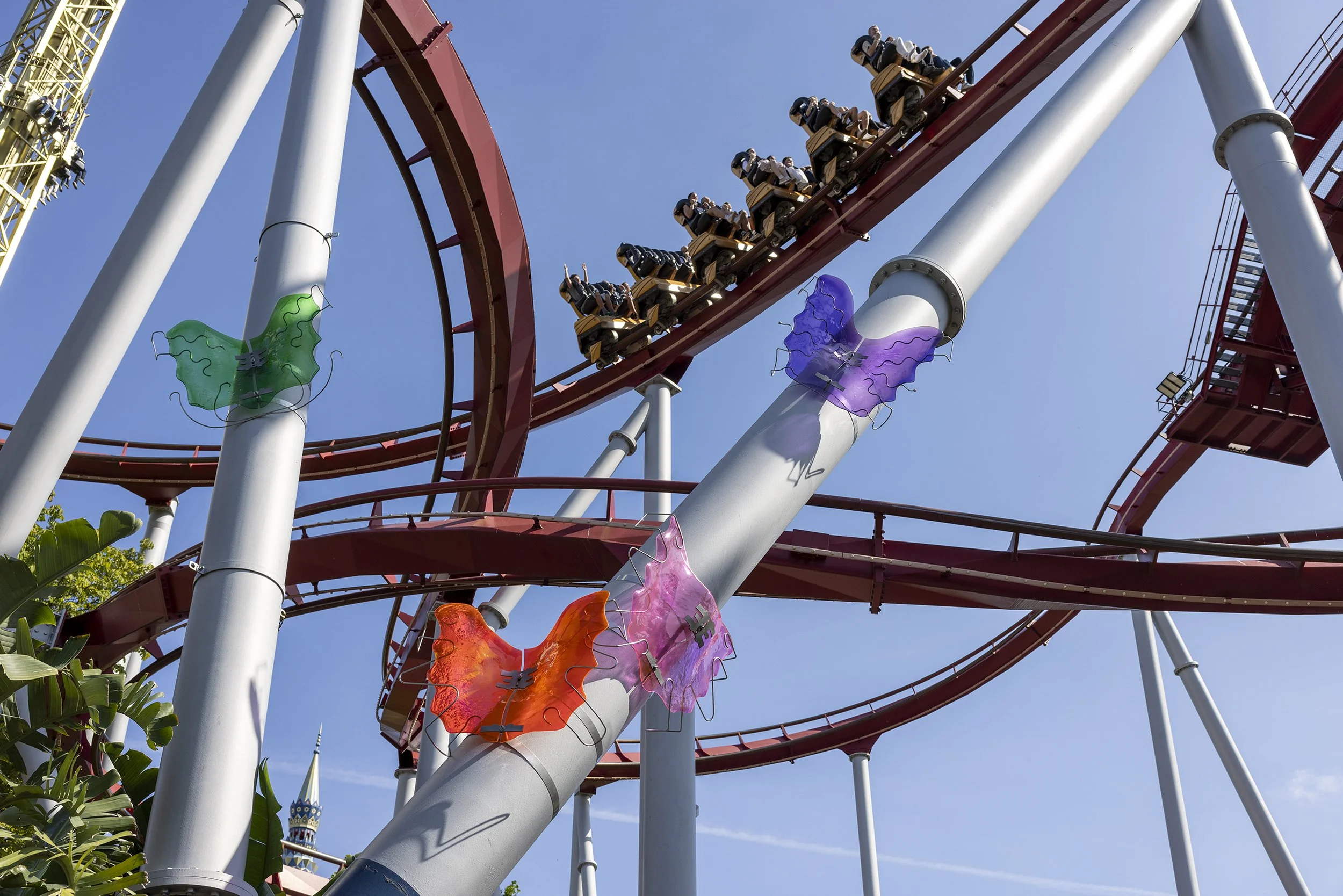
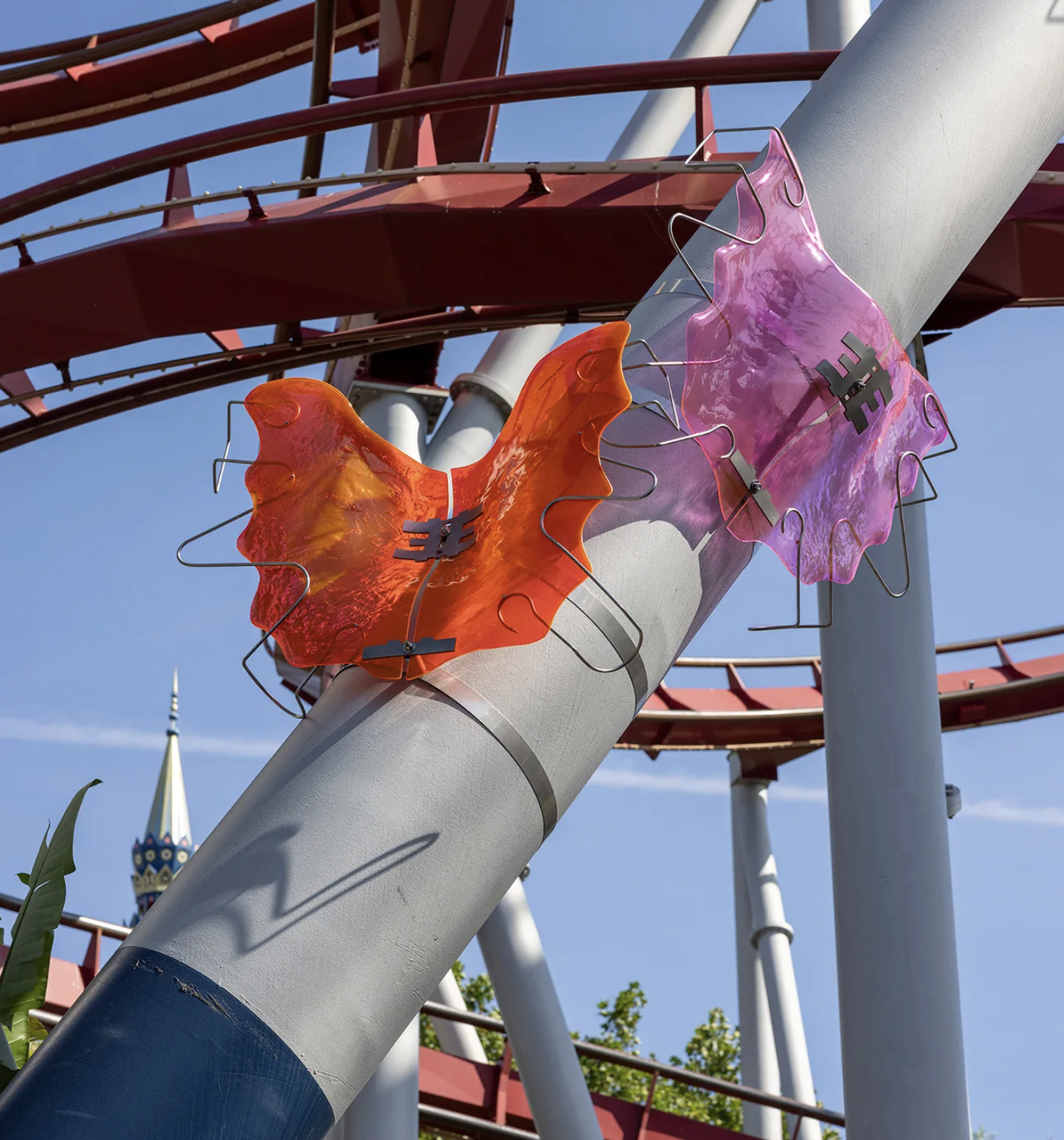
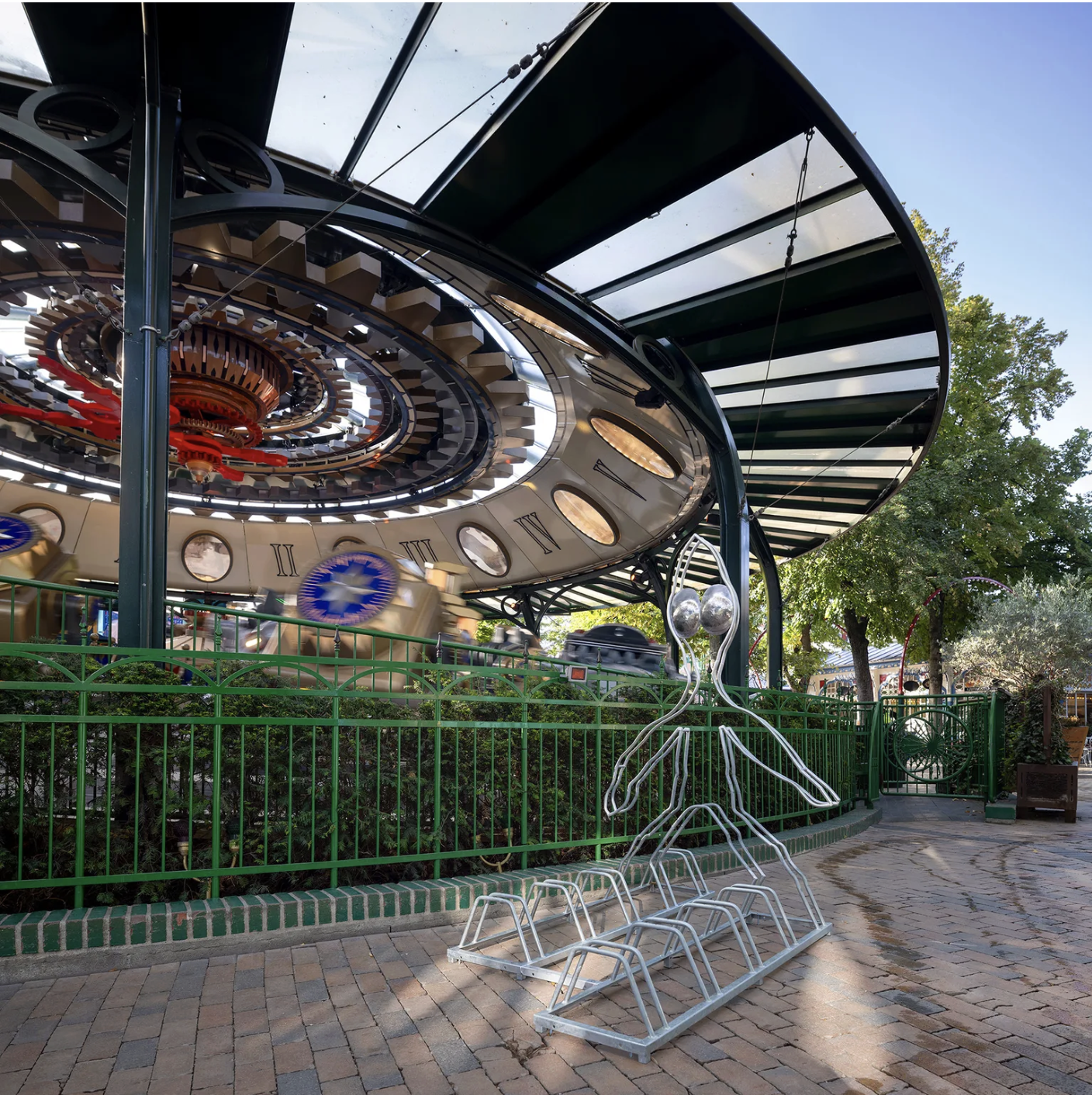
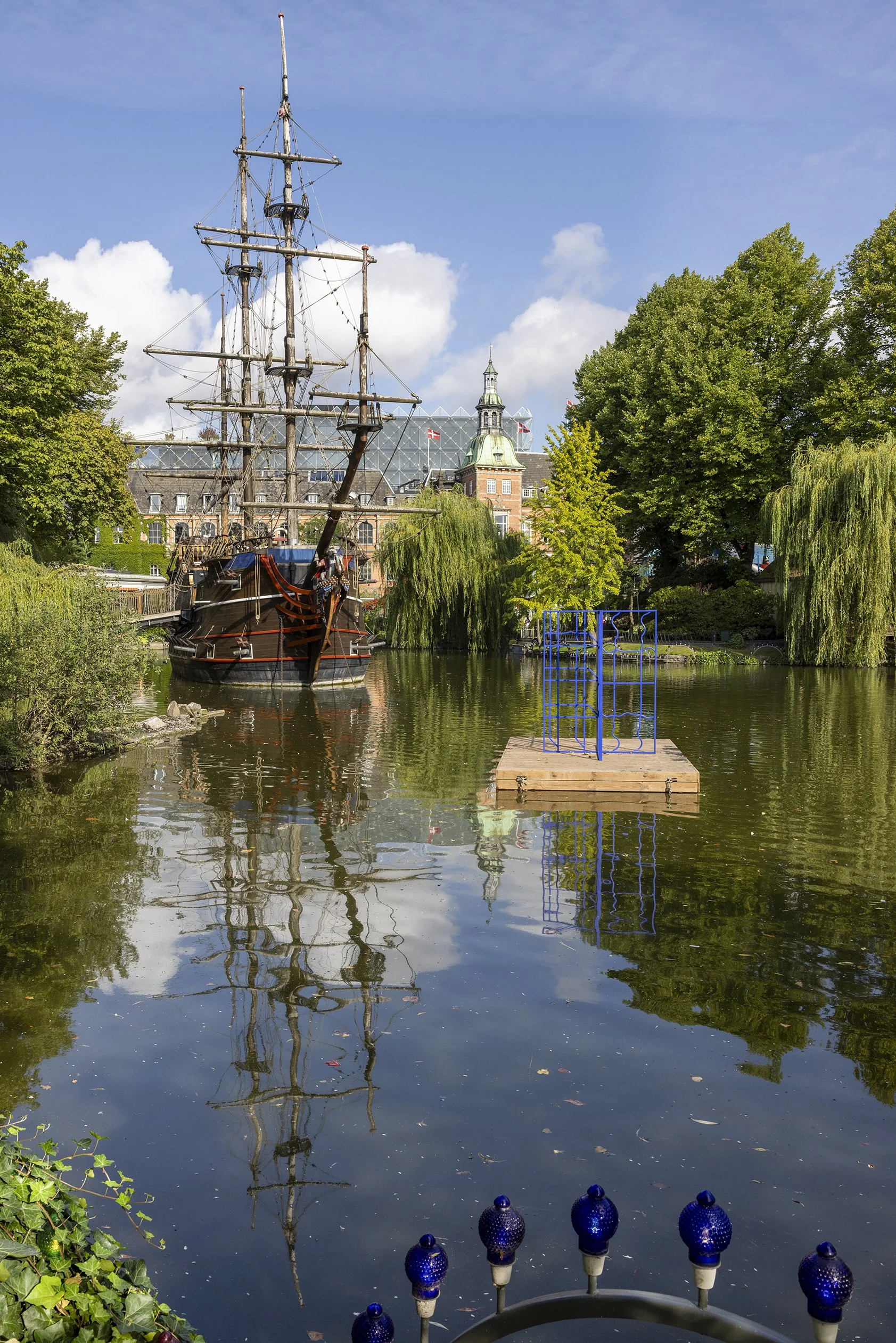

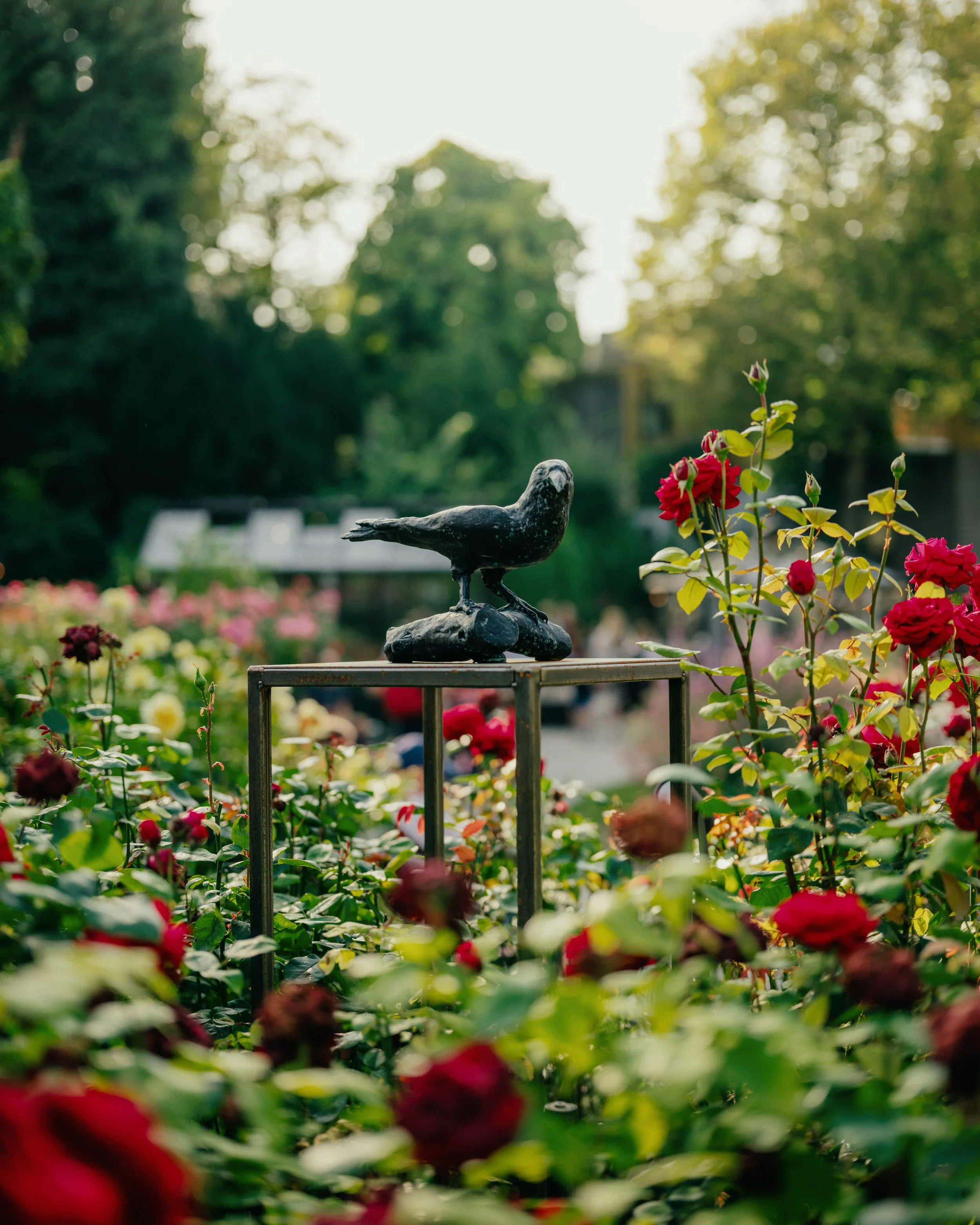
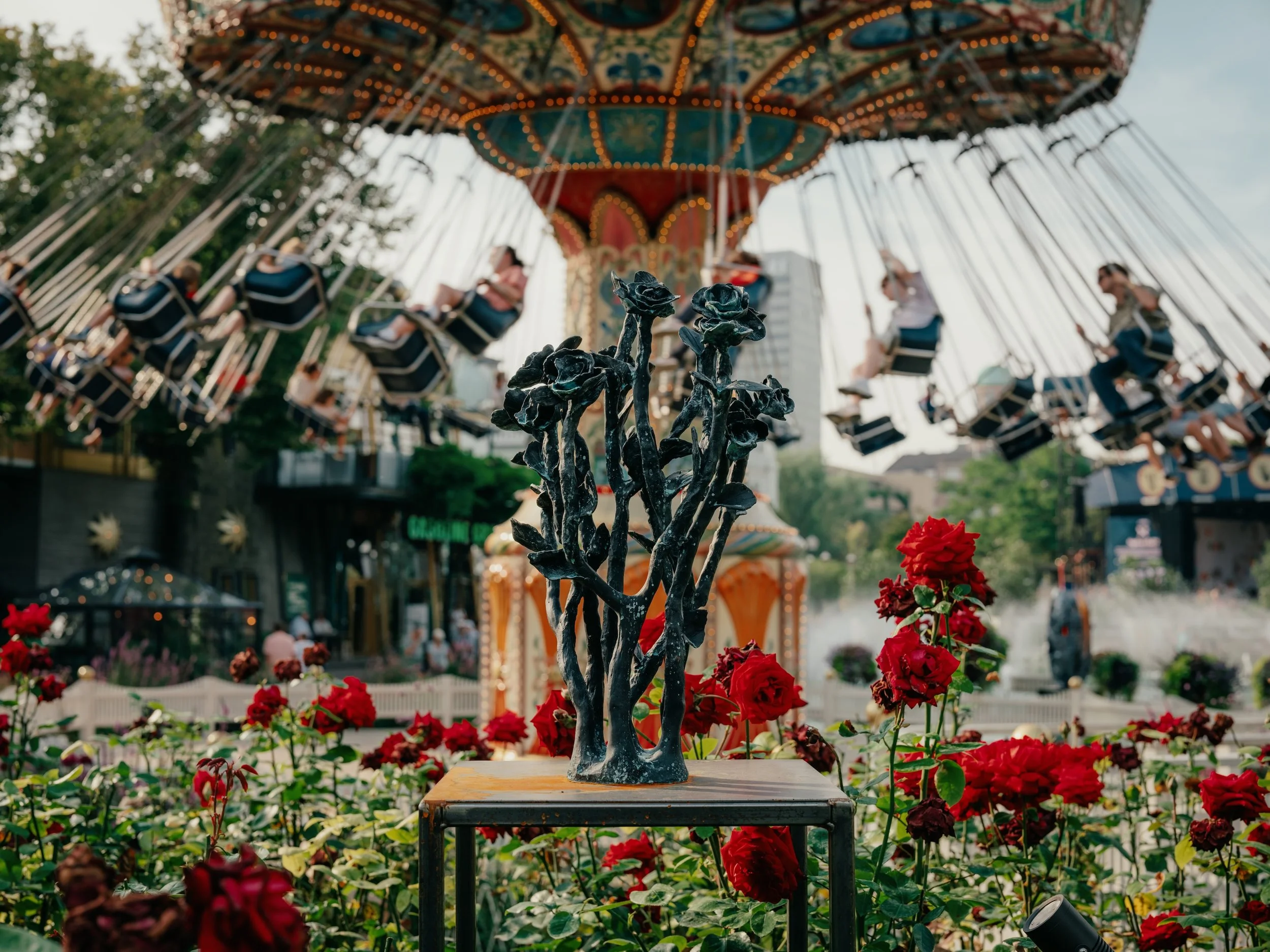
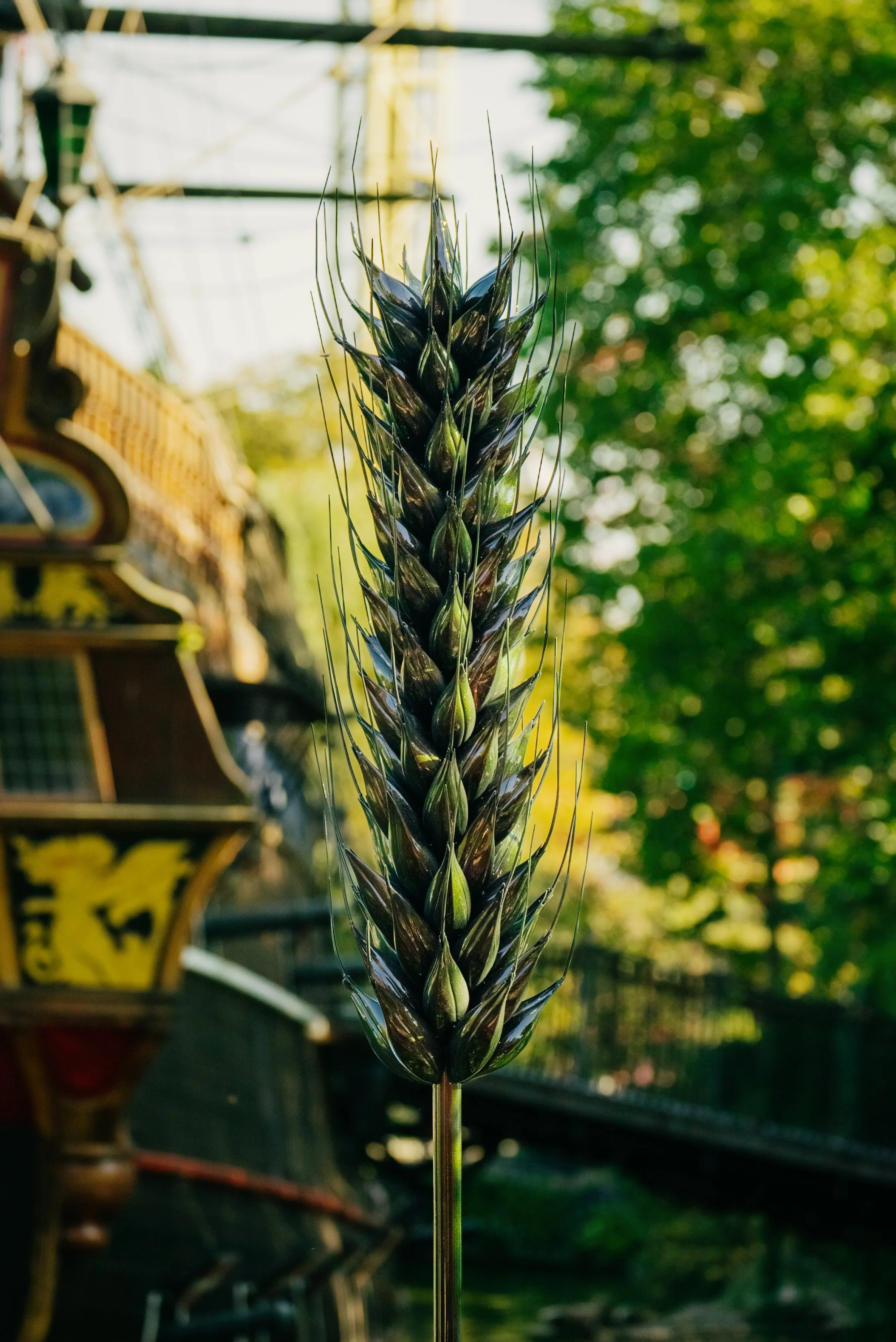
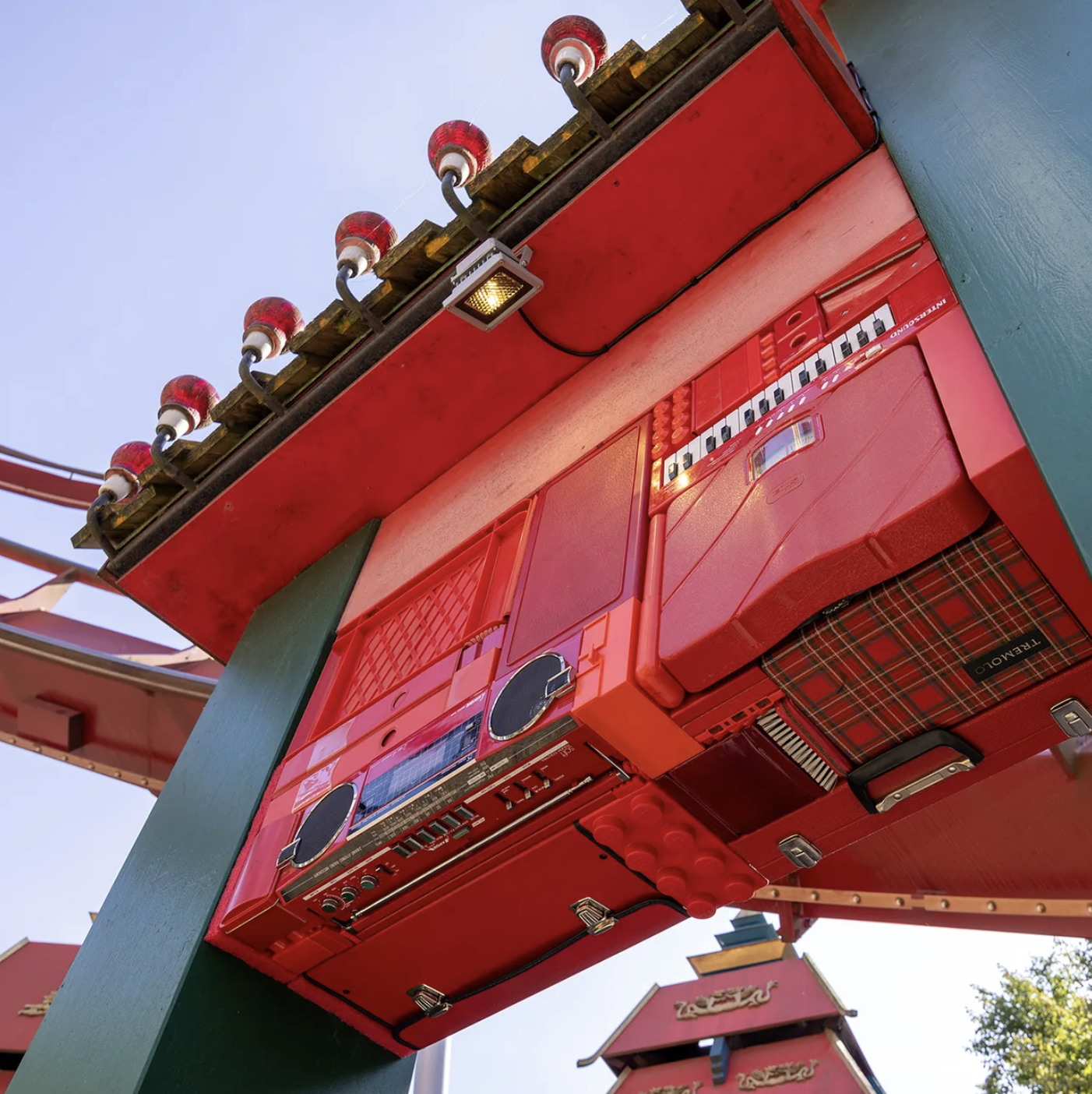
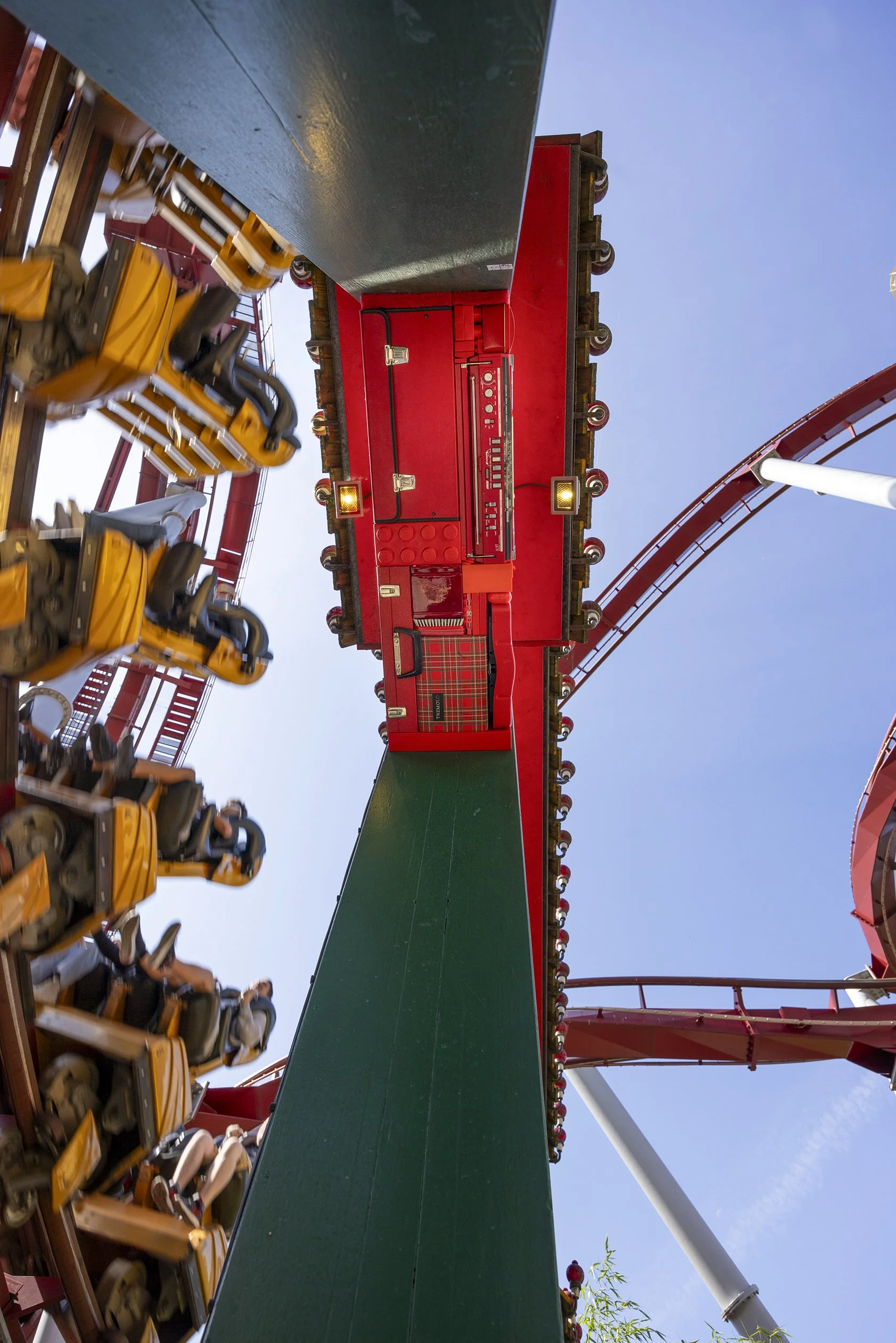

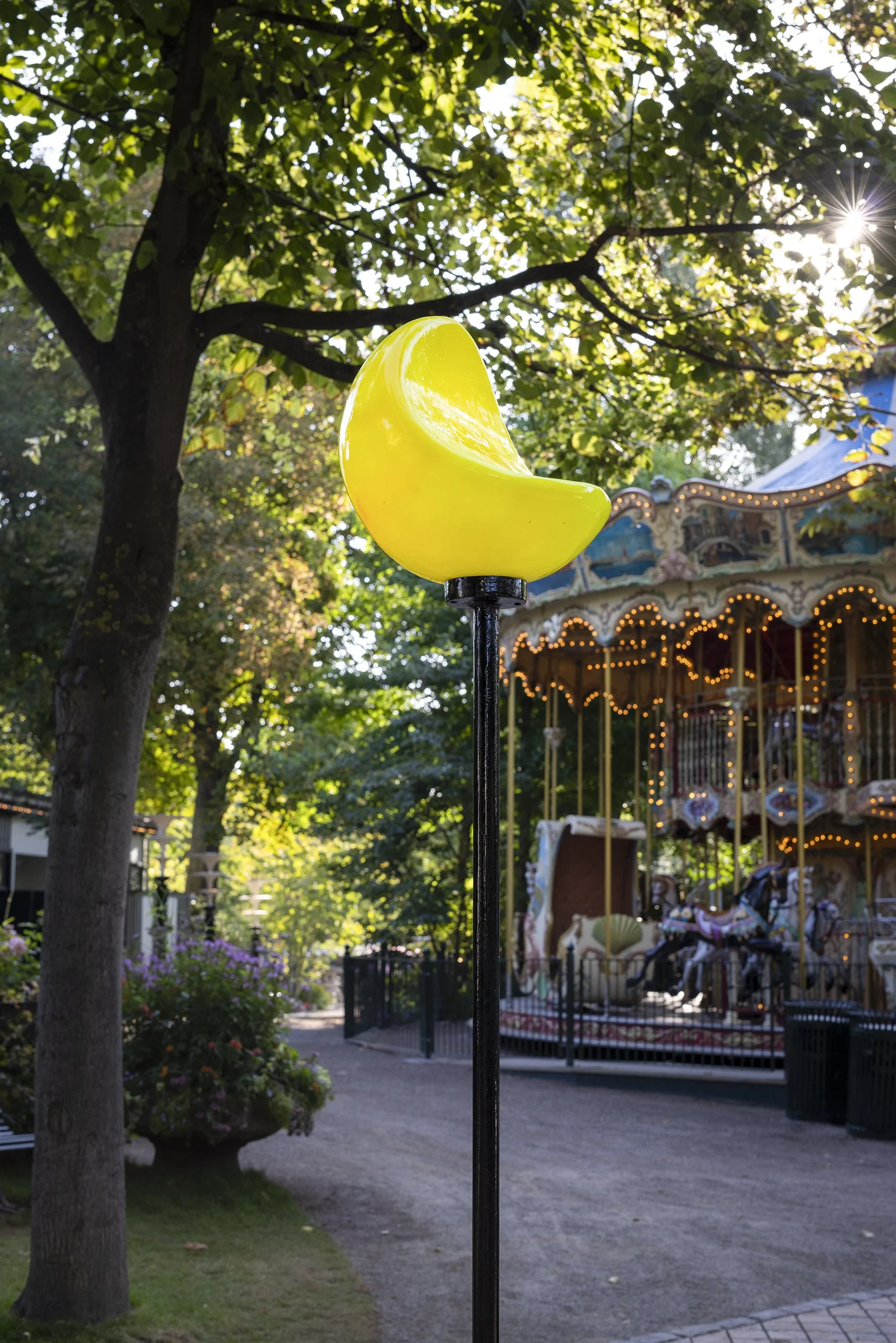
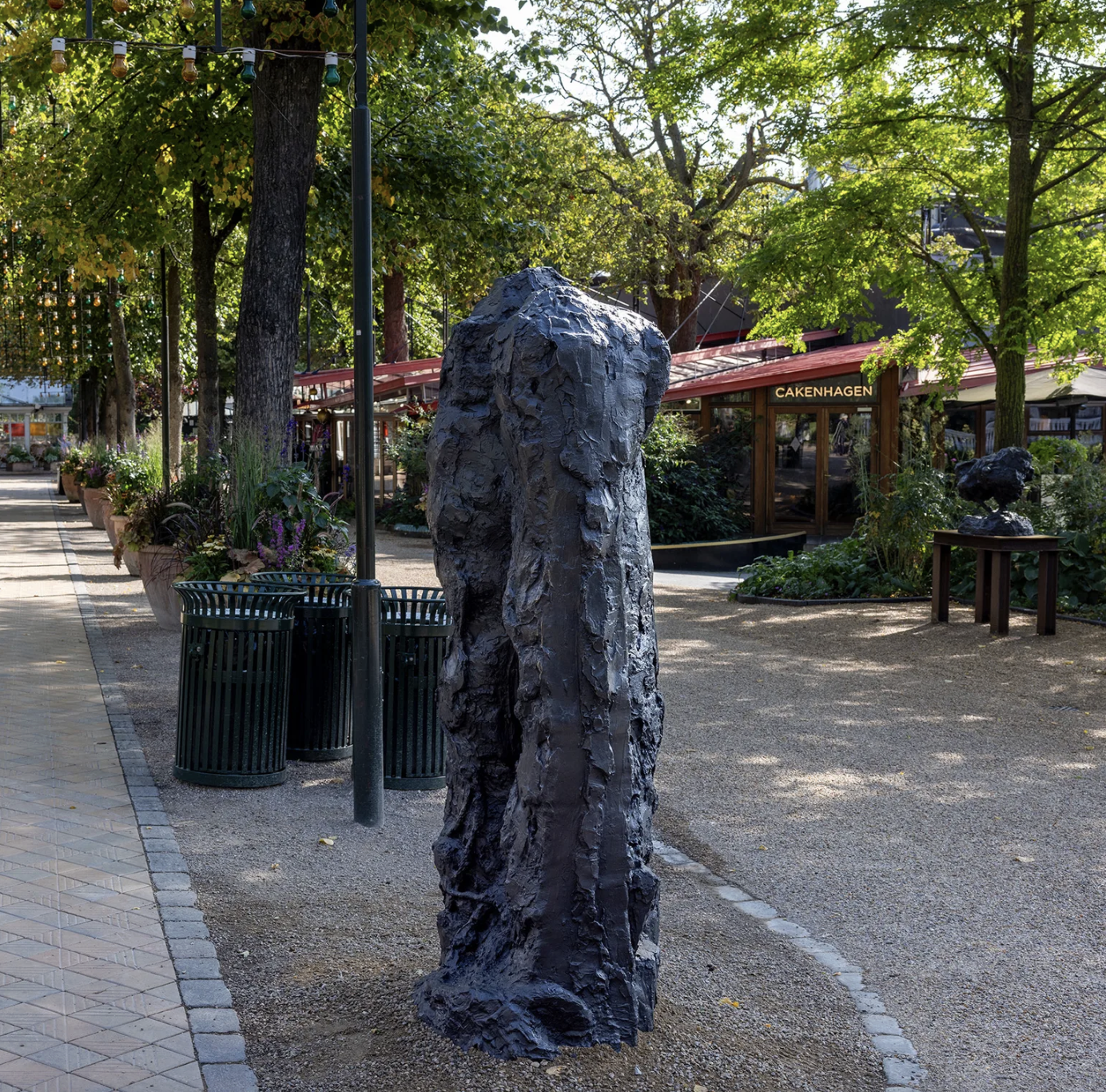
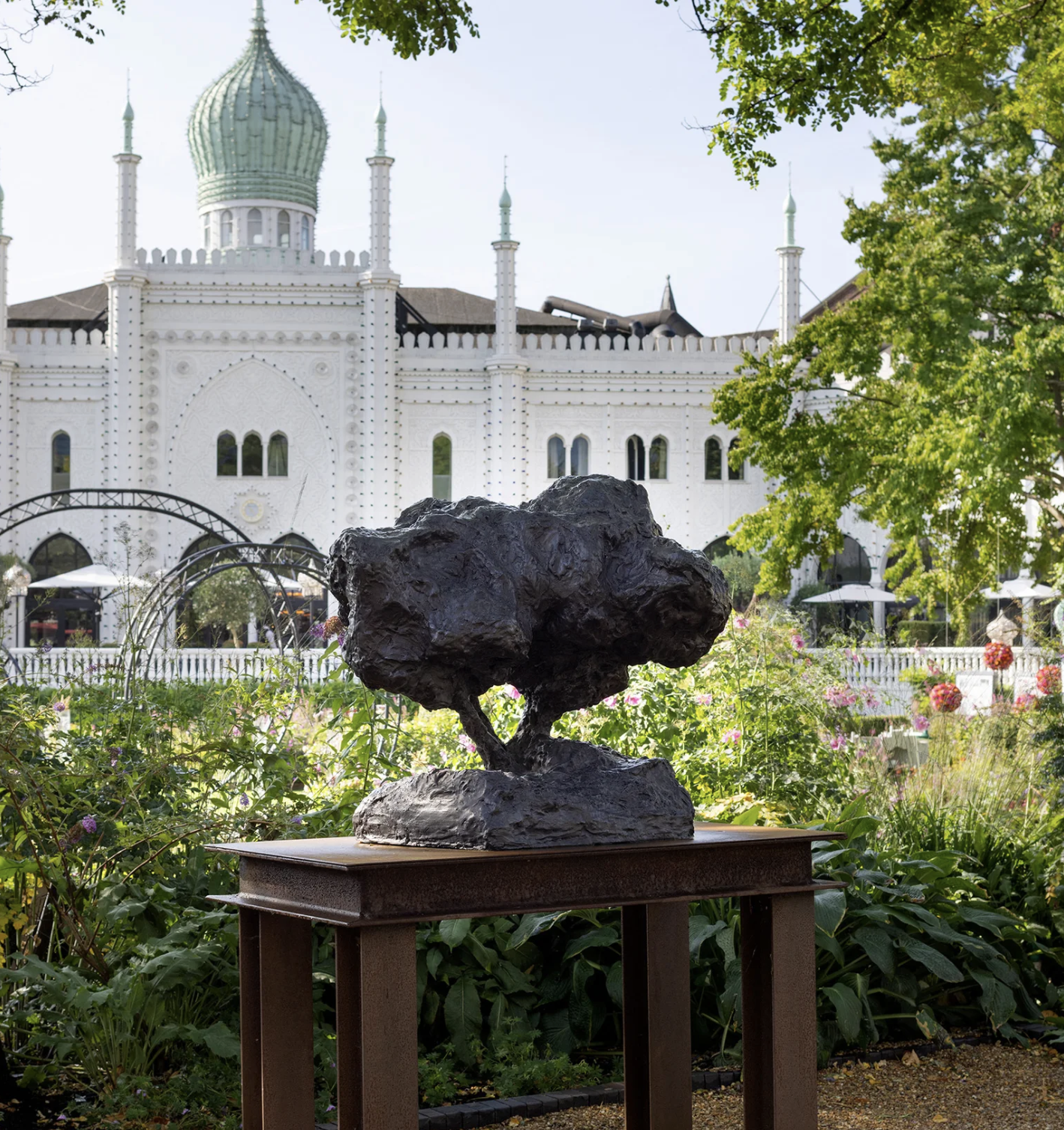
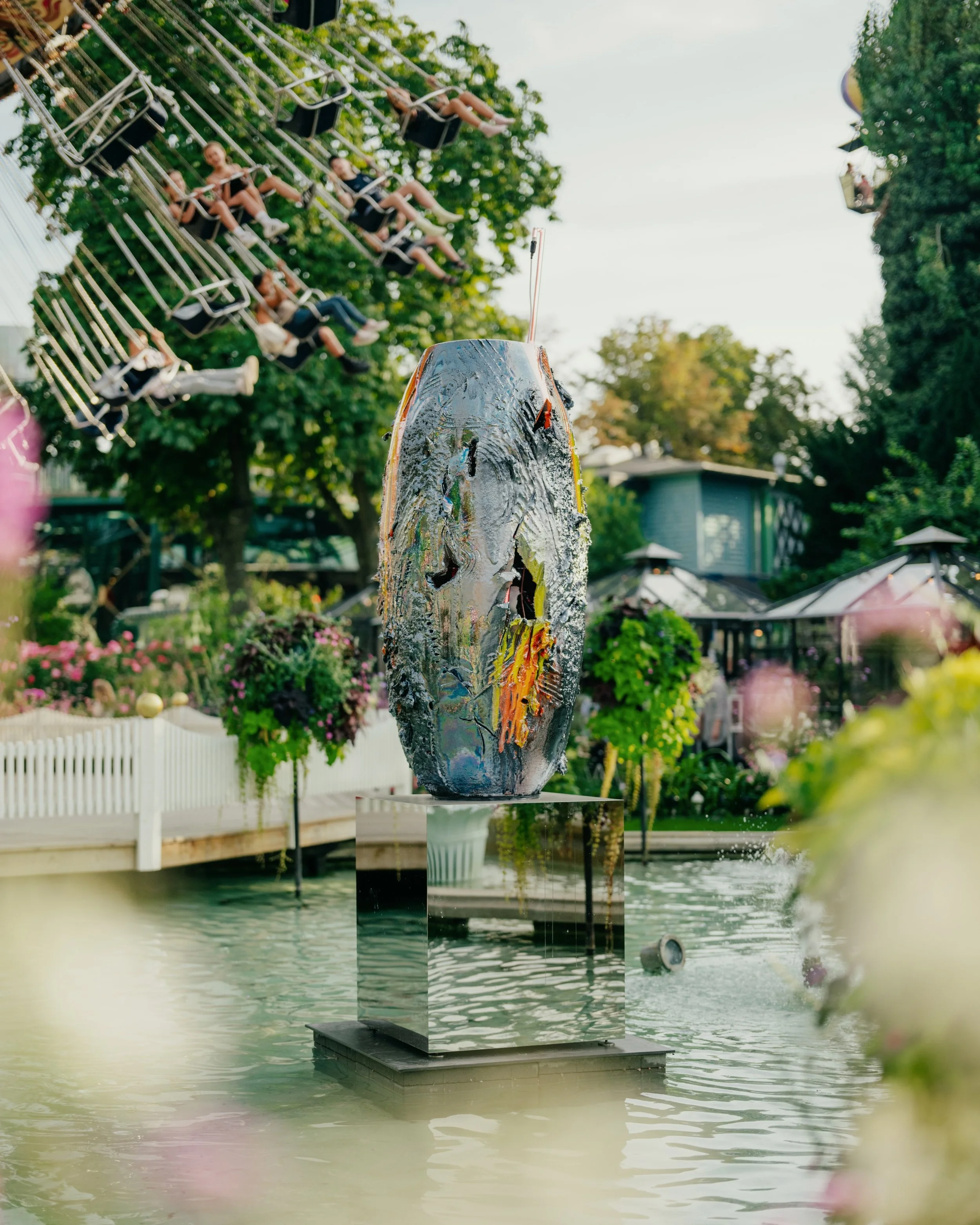
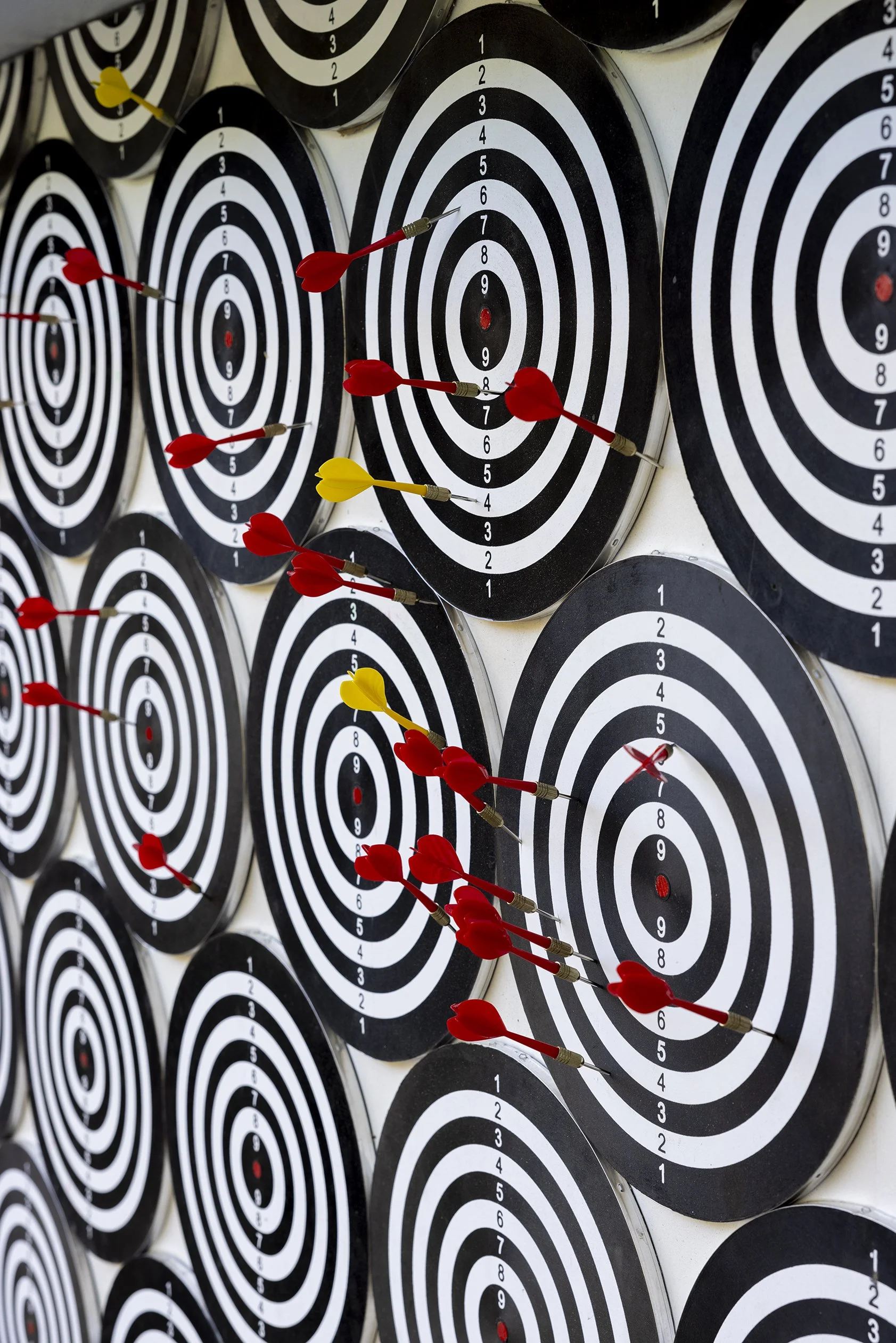
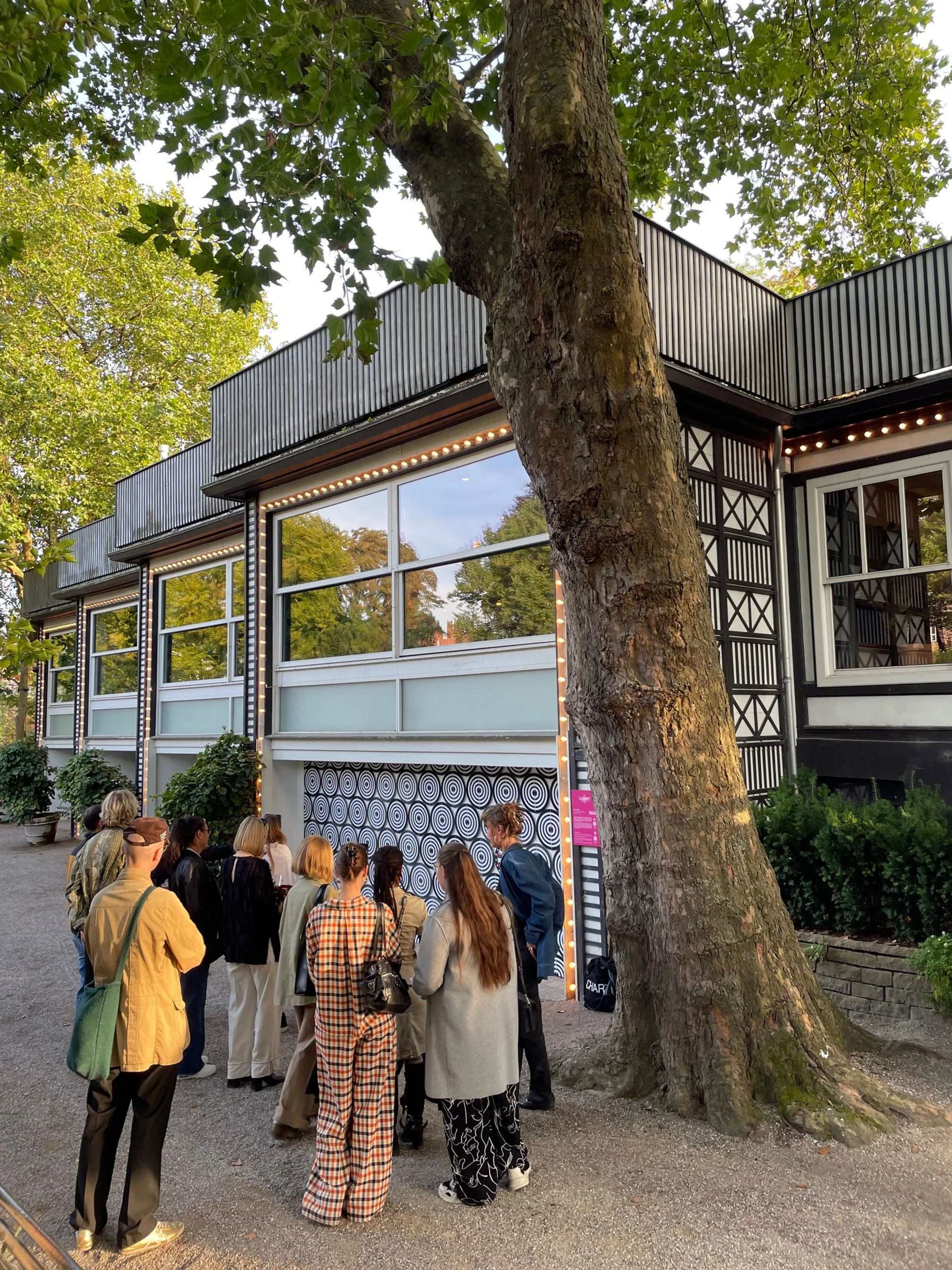
CHART in Tivoli is an off-site contemporary art exhibition that takes place in the iconic Tivoli Gardens amusement park every summer, in collaboration with leading galleries from across the Nordics. The exhibition lasts for one month, opens the same week as CHART and then remains open to the public until Tivoli closes for the season towards the end of September.
By placing artworks within the historic amusement park context, the exhibition offers a new opportunity to broaden the audience for contemporary art, while allowing people to encounter contemporary art in a relaxed environment where curiosity, fun, and exploration are actively encouraged. As Tivoli continues to be one of Copenhagen's most symbolic cultural locations, the exhibition also aims to inspire new collaborations across Copenhagen's cultural scenes and to expand the format for what an art fair can be.
CHART in Tivoli 2024 exhibition presented an inspiring and interactive art experience to all of Tivoli’s guests, both in the gardens and online. An audio guide, produced especially for the occasion, offers unique thoughts and perspectives on each artwork, in the artist's own words.
Anslem Reyle (DE); David Nilson (SE); Jacob Dahlgren (SE); Jens Settergren (DK); Julie Falk (DK); Laura Guiseppi (DK); Maria Rubinke (DK); Matti Sumari (FI); Michael Johansson (SE); Morten Buch (DK); Per Kirkeby (DK); Peter Frie (SE); Rose Eken (DK).
Retainer Bodies, 2024, Laura Guiseppi (DK)
The work series 'Retainer Bodies' by Laura Guiseppi depicts enlarged dental retainers. Retainers are used to correct the mouth and teeth alignment. The sculptures play on the many associations that a dental retainer can evoke. It is both embarrassing and smelly, but it also helps to give a uniform and beautiful set of teeth. At the same time, the retainer is quite literally a foreign object in the body and, in its enlarged form, resembles something from outer space—a piece of armor, a shield, an enormous flower, or perhaps a mutated giant butterfly. The shapes and colors are initially attractive but also repulsive when we see what it actually are. This duality is interesting because it says something about our relationship with nature and the body as a malleable entity.
In Tivoli, the duality in "Retainer Bodies" is intensified. In these magical surroundings, the transformation of the grotesque form into giant butterflies, flowers, or something else becomes believable and not bizarre, blending with the park's decorative and enchanting architecture.
Courtesy of the artist, Lagune Ouest and CHART in Tivoli 2024. Photo by Jan Søndergaard
I am Threshold, 2024, Matti Sumari
Sumari’s artistic interventions often extend to the exterior of exhibition spaces - to the public realm: A strange, humanoid figure sprouts from pre-existing bike racks. Our daily use of utilitarian objects is once again called into question when confronted by the enlarged extra-terrestrial, its reflective eyes forged from the aforementioned hammered metal. A silhouette with lobster-like bifurcated limbs. Crustaceans, aliens and androids aside, this spindly, slenderman shape is in fact the copy of a seaweed fragment (blæretang) that the artist found over half a decade ago. This sentimental - almost ceremonial - talisman has traveled with Sumari ever since and remains a recurring allegorical or anthropomorphic concern within his practice.
Photo: Matti Sumari, I am Threshold, 2024. Illegal catering kitchen
Courtesy of the artist, Galleri Cora Hillebrand and CHART in Tivoli 2024. Photo by Jan Søndergaard
I’m Not One, 2024, Julie Falk (DK)
For CHART in Tivoli 2024 Julie Falk presents a series of body-sized, rosy-skinned marble slabs that are balancing, tall, and thin. The sculptures are perforated as if after a biopsy, pointing at how we as bodies ultimately always share matter, as the title says “I’m Not One”.
During CHART weekend, "I’m Not One" creates a straight line from Tivoli Gardens to the main venue of CHART Art Fair at Charlottenborg. Here, the rosy-skinned marble slabs, hanging from the ceiling of Sharp Project's gallery booth, form a series of perforated stone bodies in dialogue across the city center of Copenhagen.
In her first large-scale solo exhibition, Antiform, Falk took discarded bodies as a point of departure—from bronze casts of hair cut from hospital-prescribed wigs to enlargements of cardboard tubes from used fireworks, giant phallic figures that seem over-run, deformed, and embrittled, resting on the floor in the exhibition’s front space. Falk points to the bodily displacement of the artist herself, working away from the studio, as an inverse or anti-position, operating at odds, and meanwhile collecting scrap materials—forms that are discarded, abject, or thrown from use or even from art: Antiforms.
With a nod to the 1960s situationist movement, Falk turns around existing systems or architecture. The arrested pace of the hospitalized body—in bed as if “incarcerated” and working from confinement—is the baseline of Julie Falk’s (DK, 1991) recent sculptural and filmic works.
Photo: Julie Falk, I’m Not One, 2024. Sculptures of Marble placed on steel plinths
Courtesy of the artist, Sharp Projects and CHART in Tivoli 2024. Photo by Joakim Züger, Barsk Projects
Rose, Belladonna, Raven 2024, Rose Eken (DK)
For CHART in Tivoli 2024 V1 Gallery is pleased to present a group of sculptures by Rose Eken (b. 1976). In the context of Tivoli Garden, Eken’s bronze sculptures are juxtaposed with the living garden as their dark counterparts. Eken’s upward-spiraling plants defy expectations, simultaneously mourning and celebrating humanity’s fractured connection with the earth. Eken’s plants strain between matter and form. Deadly nightshade, entangled roses, and dying sunflowers. So appealing in their labored intent to defy gravity, but all of them were deadly poisonous or slowly decaying.
Eken’s work often mines the world of the everyday, while simultaneously veering into a parallel world of darkness and broken connections. The works are a testament to grief and the disenchantment of Modernity in an era of ecological crisis. The transgressive identification with despair, desolation, and death provides a paradoxically generative refuge for outsiders. Rendered in bronze, her works stand as talismans and reminders of our deteriorating relationship with the earth.
Rose Eken, Rose, 2024. Patinated bronze
Courtesy of the artist, V1 Gallery and CHART in Tivoli 2024. Photo by Joacim Züger, Barsk Projects
Harvest, 2024, Jens Settergren (DK)
Wilson Saplana Gallery presented the site-specific sculpture Harvest (2024) by Danish artist Jens Settergren. In Denmark, the straw of wheat has a clear symbolic value as it, to most people, is instantly recognisable as an indicator of summer. When it sways in the wind, sweeping across the landscape, it evokes feelings of serenity and nourishment. It is placed on the banks of the Tivoli Lake, flanked by the mill and the St. Georg III Frigate, among the colourful flowers as an addition to the towering amusements. But its presence enhances more than the charming idealisation of Denmark present in the park.
This over-dimensioned wheat straw is rendered in steel; it is rigid, and the stem is stripped of leaves and joints. Unnerving but equally seductive and enchanting - with its metallic lacquered colours that reflect the light and change as you move around the sculpture - it is presented as a piece of constructed nature as if it’s been domesticated and cultivated into something grotesque, an omen of farming technologies and of an understanding of nature as but a resource to be controlled. Its fantasy reveals the reality of present and, most likely, future industrialised agriculture, and the imaginaries that this future evokes.
Photo: Jens Settergren, Harvest, 2024. Sculpture in steel lacquered in chameleon autopaint
Courtesy of the artist, Wilson Saplana Gallery and CHART in Tivoli 2024. Photo by Joakim Züger, Barsk Projects
Real Life Tetris, 2024, Michael Johansson (SE)
Michael Johansson created two new site-specific installations that continued his ongoing sculptural series Real Life Tetris. Johansson’s sculptures transform everyday objects and spaces into places for artistic intervention. His works subtly comment on our experience of place, space and our relationship to objects.
Johansson deals with ordinary objects we all recognize but in a way far from the ordinary. When objects are morphed into precisely stacked shapes and connected to a certain place, they are transformed into catalysts of new meanings.
Photo: Michael Johansson, Real Life Tetris, 2024. Installation of everyday objects
Courtesy of the artist, Helsinki Contemporary and CHART in Tivoli 2024. Photo by Jan Søndergaard
I found myself within a forest dark, 2024, Maria Rubinke (DK)
At first glance, the round park bench appears frail. At the center, the stump of the tree that it once enclosed remains, its serpentine roots holding together the brittle wood. The bench, however, is anything but fragile. It has been cast in bronze and consists of more than 500 individually cast pieces.
The work “I found myself within a forest dark” (2024) is the most recent work by Danish sculptor Maria Rubinke, and the bench, much like the artist’s previous work, revolves around existential questions and the artist’s ongoing exploration of darkness. However, a glimmer of hope is present, as the roots suggest life underneath the surface.
Photo: Maria Rubinke, I found myself within a forest dark, 2024. Patinated bronze
Courtesy of the artist, Martin Asbæk Gallery and CHART in Tivoli 2024. Photo by Jan Søndergaard
Tellus Luna, 2024, David Nilsson (SE)
Tellus Luna is a sculpture in the shape of a lamppost. The round shade is partly concave and changes with the motion of the viewer. From a certain angle, the silhouette of a moon occurs, which during the dark hours colours the surroundings with its shine. David Nilson’s series of moons carried by a lamppost has been ongoing since he graduated from Malmö Art Academy in 2013. The early monochrome colours have since then developed with his intuitive and vibrant painted tones. But the almost Magrittean scene that occurs in front of our eyes is still there.
The work is represented in both public and private collections in Sweden and Europe. It was also included in the exhibition The Romantic Eye at the Nationalmuseum, Stockholm, SE.
Photo: David Nilson, Tellus Luna, 2024
Courtesy of the artist, Galleri Arnstedt and CHART in Tivoli 2024. Photo by Jan Søndergaard
J.P. Jacobsen, 2012, Per Kirkeby (DK)
Galleri Bo Bjerggaard presented Per Kirkeby's monument to J.P. Jacobsen (1847-1885) in bronze, a significant tribute that encapsulates the artist's classic vocabulary. The sculpture appears with an upright tree on the front, bisected by a slit in the middle, which reflects the geological forms that often appear in Kirkeby's works, inspired by his numerous expeditions to Greenland. Kirkeby's vocabulary often includes meltwater cones; in the sculpture, this is clearly seen as a fan-shaped structure at the base.
On the back of the sculpture, stones are found placed at the base of the tree. When viewing the sculpture from this angle, another characteristic feature of Kirkeby's artistic language is revealed: the beam. At the top of the sculpture, there is an indication of a horizontal beam, while a vertical beam is also integrated into the design. These elements of beams, stones, and meltwater cones are recognizable motifs that frequently appear in Kirkeby's paintings.
Photo: Per Kirkeby, J.P. Jacobsen, 2012. Scultpure in Bronze
Courtesy of the artist, Galleri Bo Bjerggaard and CHART in Tivoli 2024. Photo by Jan Søndergaard
Tivoli Tree, 2024, Peter Frie (SE)
Galleri Arnstedt presents one of his bronze sculptures “Tivoli Tree”. Peter Frie is best known for his paintings but has since 2009 worked in bronze sculpture. The inspiration comes from his own works where the trees have emerged into "three-dimensional paintings". His trees and landscapes are not tied to a specific place, they exist at once nowhere, and everywhere.
“The trees are recognisably a painter's sculptures, given they are shaped as much by light and shade as by the hand... they create their own surrounding world and scale. When we look at them, we can see the air vibrating around them." (Timo Valjakka, Under the Red Sky, 2016)
He works at the foundry Bangkok Studio, Prachin Buri, Bangkok, Thailand where the Swedish caster Ulf Ferreus acts as a link to the workers. Peter Frie is usually involved in the entire process, from model work on a 1:1 scale to the finished work leaving the foundry. Some sculptures are upwards of three to four meters high and weigh a few tons, while the smallest is only a few decimeters and weighs a couple of kilos. During 2023 and early 2024, Frie showed a group of Trees at Nationalmuseum, Stockholm.
Photo: Peter Frie, Tivoli Tree, 2024. Sculpture in bronze
Courtesy of the artist, Galleri Arnstedt and CHART in Tivoli 2024. Photo by Jan Søndergaard
I, The World, Things, Life, 2024, Jacob Dahlgren (SE)
For CHART in Tivoli 2024, Jacob Dahlgren presents an interactive installation, “I, The World, Things, Life” consisting of multiple dartboards and darts. The work removes the hand of the artist and instead functions more as a series of instructions. A wall in one of Tivoli’s many restaurants is covered by dartboards; the optical illusion begins. Darts are placed in boxes next to the installation, and the audience is invited to engage with the work. Scoring a bullseye should be easy with so many chances, but the more one tries to focus, the more the targets move. Darts are thrown until the boxes are empty. The darts are then returned to the boxes and the process continues.
Jacob Dahlgren’s work is concerned with a dialogue between the authoritative singularity of pure formal abstraction and its position within a variable, complex, and socially shared culture. His repetitious collections of ubiquitous and ordinary objects, often domestic, and industrially manufactured; stand in their gestalt form as a proxy for High Modernist Abstract Painting and for all of the ideological territories that Twentieth Century Art Theory has staked out for it. The contributing objects, however, signify a collective and human aspect of society, each representing an individual choice, to be used or consumed uniquely by its consumer. Together these objects stand for the group or community, and as such they become democratic rather than authored. This is evident in Dahlgrens’s social practice – a series of performance events around the world involving local communities – as well as in the large-scale sculptural installations in the public space for which he is well known.
This relationship with everyday life is one of the pillars of Dahlgren’s practice. Dahlgren constantly seeks geometric and abstract patterns in the surrounding world and processes the mundane and quotidian into art. His own life is inseparable from his work in a tangible way, for his project Peinture Abstraite he has worn striped t-shirts for the last twenty years and plans to do so for the rest of his life, as a living and on-going exhibition, sometimes with external curators invited for a couple of weeks.
Photo: Jacob Dahlgren, I, The World, Things, Life, 2024. Interactive dartboard installation
Photo by Anna Fernsten Nilén